By Michael Jarvis
With this piece I intend to draw a thread between the ancient and yet still prevalent trope of blind oracles and seers with the real-world phenomena of advanced insights which come about in times of physical limitation. I believe there is compelling evidence to suggest that, in states of compromised sensory input, one may become more receptive to the happenings of the world around them, be it through precognitive dreams, or through heightened physical or spiritual senses.
 My earliest childhood memories contain hours spent peering over my brother’s shoulder, watching him play video games that were far above my level of skill. One such game that has remained near to our hearts is 2004’s Fable. A central character in this game is Theresa, the protagonist’s sister who was blinded in a bandit raid and subsequently develops access to a world beyond normality. She then goes on to guide the player throughout the rest of the game with her clairvoyance and special insight. This trope of the blind seer or blind oracle dates at least as far back as the Greek mythos. The figure Tiresias, who bears a name suspiciously similar to one previously mentioned, is alleged to have lived for several generations, serving as an oracle for Apollo while living with blindness, or making appearances in Hollywood films such as Oh Brother, Where Art Thou?. This is not the only instance in mythos of blindness leading to a higher awareness in some other form. Odin, for example, is famous for having removed an eye in order to gain higher knowledge.
This idea of subdued senses leading to an otherwise heightened awareness was also capitalized upon by Marvel’s Daredevil. This comic series depicts a lawyer called Matthew Murdock who, after losing his sight in a horrible accident, subsequently develops a superhuman sense of hearing, smell, and tactile perception.
Aside from dramatizations such as these, research by the University of Washington shows that many blind individuals develop an improved sense of hearing to compensate. There are even voluntary practices which rely on sensory deprivation to elevate one’s ability to function and be well, whether spiritually, emotionally, or physically. Flotation tanks are a somewhat common method of sensory deprivation by which individuals seek to reach a meditative, enriching state by depriving their senses of stimulus. It seems that whatever mechanisms are at play here have been reflected in fiction and mythos for longer than we might have otherwise thought.
This state of higher functioning in otherwise limited circumstances is present in more ways than one, for there are those who have found themselves made conscious of events normally beyond their reach whilst in a dream state. It is as if by subduing one sense the body can attune more fully to other sources, whether subdued by an unconsciousness or physical barrier.
The first time I heard of precognitive dreaming such as this was when my grandmother retold a particularly unnerving experience to me. She awoke one night from a disturbingly vivid dream where she saw the bank of the Mississippi river, upon it lying the dead bodies of two women. She saw their features in detail, and she carried a sick feeling in her stomach afterwards. It was only a few days later she saw an aerial shot on televised news. Two women were found dead on the bank of the Mississippi river near Destrehan, Louisiana- women wearing the same clothes and of similar appearance to the ones from her dream.
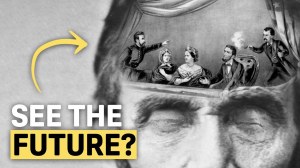
While secondhand stories like these are often met with well-deserved skepticism, this phenomenon is not infrequent nor undocumented. In fact, a 1988 study conducted by Dr. David Ryback found that approximately two thirds of a sample of 500 individuals reported having dreamt of an event before it ever occurred. Perhaps the most famous example of precognitive dreaming is that of Abraham Lincoln’s. It was reported by an associate of Lincoln’s, Ward Hill Lamon, that he had dreamed only a few nights before his death of a nondescript president’s assassination.
It appears as though there is more to the dreamworld than we’d initially think. Certain studies have shown that odd dreams may be a predictor for future illnesses. For example, a team of neurologists at the Chronic Diseases Research Center in Lisbon have determined that dreams with intense negative emotions could be an indicator for cognitive decline associated with Parkinson’s disease as recently as 2021. This suggests that our dreams can be an indicator for happenings we are aware of only subconsciously. The concept that dreams contain hidden information certainly is not new. Humanity has been psychoanalyzing people’s dreams for centuries to learn more about the individual’s state of mind.
But then, how could my grandmother have received the news that two women whom she’d never met before were dead on the bank of the Mississippi River? Is it possible that entering the dream state puts us in a position that is more sensitive to premonition and insight that we are not fully aware of, regardless of whether that information pertains directly to us or someone else entirely? Perhaps instead of being an inactive audience to random strings of imagination, the dream state is a funnel for whatever loose information happens to be bouncing around the cosmic sphere at that time.
The removal of stimulus has shown to lead to higher cognition both in mythos and in the real world, whether that be through ancient story tropes, real world precognitive dreams, or modern sensory deprivation practices. The mechanism at play is certainly physical on some level, as it makes sense that the body would be able to divert its energy and focus to another sense in the case of blindness or something similar. However, there seems to be a metaphysical aspect to this phenomenon, perhaps attuning to communal consciousness of the universe which grants us with visions. Whatever the means, this at least beckons our recognition that the world may not function exactly as we believe it to, and much is left beyond our usual awareness.
 Paranormal Culture: A Popular Journal in the Superhumanities!
Leave a comment