By Kenny Paul Smith
Being vegan, or better yet, eating a plant-based diet, is seriously hot right now, and has been for several years. As elegantly illustrated in the 2018 documentary, The Game Changers, it’s not only the ethical and environmentally responsible thing to do, it’s the smart thing to do for preserving, or even restoring, optimal health of one’s body, mind (and some would say) soul!
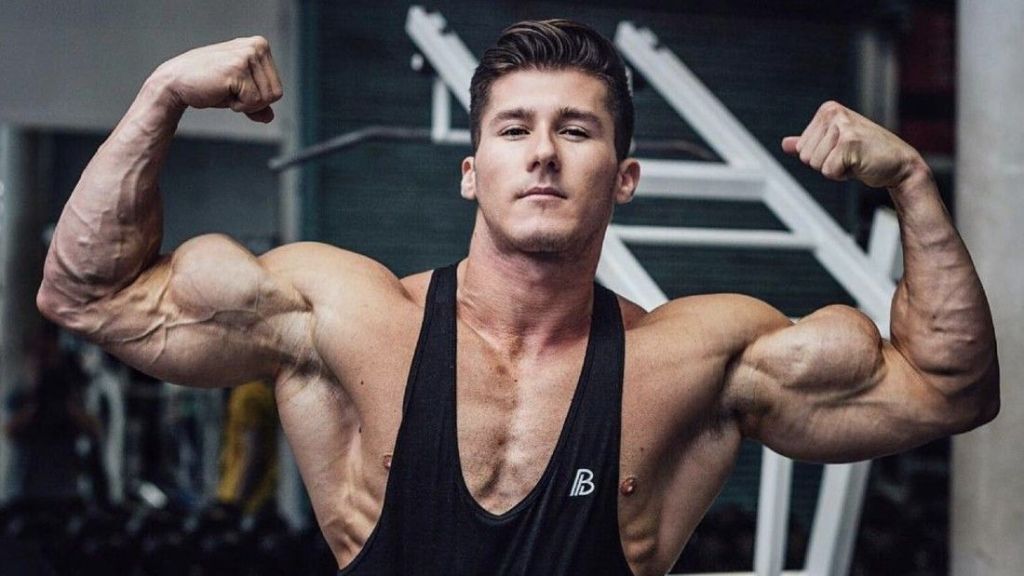
It’s not only elite athletes such as Nimai Delgado, the vegan body builder featured on the cover of Muscle & Fitness (and who appears as the banner pic for this post) who benefit from a vegan lifestyle. A whole-food plant-based (WFPB) lifestyle in particular has come to be associated with the remission and prevention of a landslide of lethal medical conditions – including the top 15 diseases with which most Americans suffer and die, such as heart and coronary disease, cancer, type II diabetes, and high blood pressure – leading otherwise cautious medical doctors and researchers to declare that eating plants rather than animals represents a scientifically-proven way “not to die”! Indeed, major figures in longevity research, such as Dr. David Sinclair of Harvard University Medical School, have identified a plant-based diet and intense physical exercise as major age-reversal pathways which, when coupled with other such pathways, could extend human lifespans to 120 years or more.
I myself switched to a WFPD diet some four years ago, as well as a daily regimen of intense exercise and other age-reversal strategies (e.g., cold and heat exposure, supplementation with DHA, mushroom-infused coffee, beat juice, creatine and NMN) and, quite frankly, the results thus far seem super-normal, from weight loss to drastically lowered cholesterol levels, increased strength and endurance, improved sleep, and overall a BA (biological age) decades lower than my CA (chronological age).
As someone who studies cultural systems in which human beings can become More, a kind of Human Being 2.0, it seems to me that this movement runs somewhat parallel to the role of the paranormal in our popular entertainment. As I’ve noted elsewhere, the films we’re most willing to shell out hard earned money to see gain and again abound in stories of human beings becoming More, as does the long history of religions, magical teachings and practices, and spiritualities. So, one might ask, why would we expected the modern day health subculture to be any different? If there is a difference, it is that religious systems offer super-normal stories and capacities (e.g., an eternal afterlife, powers to heal and perform miracles) in exchange for faithful belief and Hollywood films in exchange for dollars, wheres it is the cutting-edge sciences that are expanding our view of what the human is capable.
While I don’t think that super-normal health advances, even if they lead to greatly expanded lifespans and healthspans, are paranormal in the same way as are Near Death Experiences (NDEs), After Death Communications (ADCs), End of life Experiences (ELEs), and Precognitive Dreams, as these experiences seem to require us to postulate the existence of other dimensions and a kind of panpsychism (the theory that consciousness is fundamental to reality, and therefore present in everything). But looking at them as if they are highlights something important about the very notion of the paranormal. Namely, that it is entirely relative to what we currently know about the reality in which we live. If David Sinclair is correct and exceedingly healthy lifespans of 120+ years are just a few decades away, then once we have rounded that corner, it will quickly become our new normal, and dying at 80 will seem much as dying at 40 currently does to us, sadly before her/his time. That is, the super- will fall away.
The same could well happen with any manner of currently paranormal experiences. Conservative estimates suggest that 10%-20% of Americas (that’s 30-60 million people in our country alone) have reported NDEs, with higher percentages reporting ADCS and ELEs, and each of these are coming to be taken seriously by scholars and researchers. It may be that common recognition is also on the horizon, and when that time comes, the para- will drop away, as we come to realize that poets such as Walt Whitman were in essence correct, that “death (and indeed Reality) is different, and luckier, than what anyone supposes.”
 Paranormal Culture: A Popular Journal in the Superhumanities!
Leave a comment