By Nicola Cates
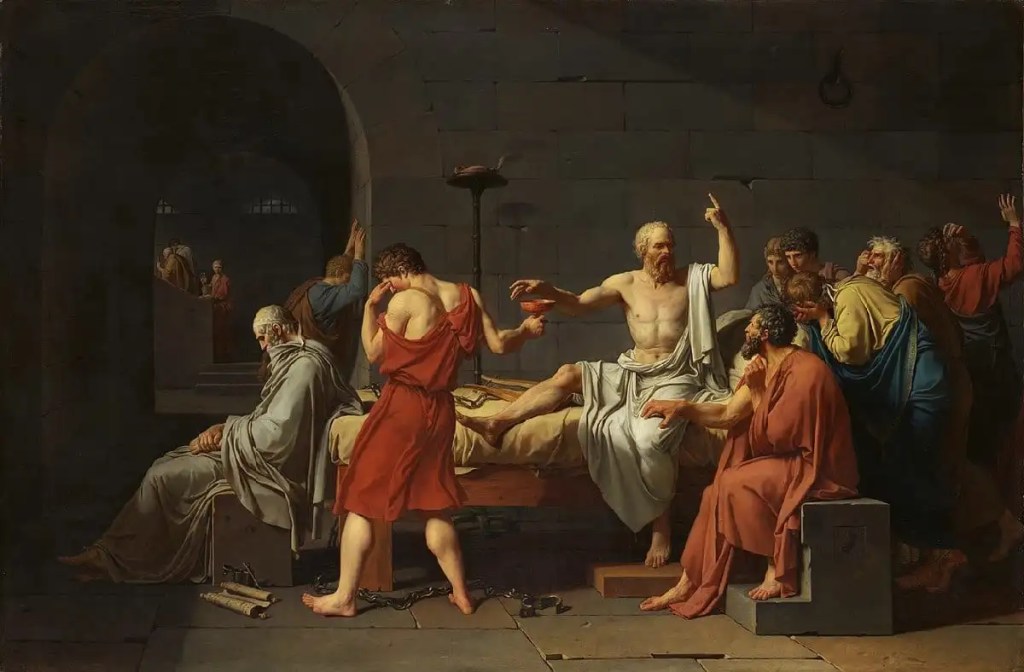
It can be easy to forget humanity has always been paranormal. Even in our prehistory we interacted with reality beyond our physical limits. Somewhere along the way we buried our paranormal past, with shameful indignation, in order to promote the false history of a disenchanted and enlightened species. This is of course heavily biased towards western thought, but it still perplexes me. Western history is still full of paranormality that was crucial to its development. Even Plato, who all philosophy is footnotes of his work, wrote about the paranormal as a part of human life and used to answer serious questions about the nature of the world.
Don’t worry this isn’t a Plato class, there will be no platonic ideals or philosopher kings here. Instead what you need to know is there was a man named Ion. Ion was a contest winning performer of Homer, who claimed to know, among other things, that he understood better than anyone what Homer says. Ion was not a smart man and couldn’t defend his claim. Plato makes many points about knowledge and expertise, and uses the chance to criticize the sanctity and importance of Homer in ancient Greek society. But what is important for our sake is how Plato thinks art and poetry are created. Plato tells Ion that it is not because he is “a master of knowledge about Homer” that he can speak beautifully about his epics, “but because of a divine gift, because you are possessed.” That whenever one performs Homer (or any art) they become possessed by the muses, and that is how they are able to inspire and bring about emotions in the audience. Furthering this idea Plato says this divine power works like magnetic forces, where one magnetic, divine source, powers an iron ring and then that ring can itself power others. That ultimately human creativity is a divine faculty passed from author to performer to audience. Make no mistake either, Plato is being quite literal here. This isn’t some false statement to trick Ion or a large metaphor it is a classic example of divine inspiration.
Plato, one of the most influential figures in western history, believed that artists and performers were tactically possessed by a divine source when exercising creativity. He even uses to explain the modern phenomena of being a ‘one-hit-wonder’ using the ancient counterpart of “Tynnichus from Chalcis, who never made a poem anyone would think worth mentioning, except for the praise-song every sings… (that) he says himself, ‘“an invention of the Muses.”’. Which does make some sense, after all if someone was truly skilled at art why wouldn’t they be able to replicate it? No carpenter ever built one house, so how come so many artists only produce one good work? If the divine source only possesses an artist one time they thats all they get. The logic is there undoubtedly, but this is not to say Plato must be correct, or even that there is any truth to what Plato is saying at all. But the fact Plato says this in the first place is worth talking about!
From our foundation humanity has been paranormal, and even our most groundbreaking thinkers understood the paranormal to be integral to a part of daily and academic life. We need to stop pretending the lies of disenchantment and rediscover our paranormal past. Though to be fair I know practically nothing, just that there are many interesting things worth exploring.
 Paranormal Culture: A Popular Journal in the Superhumanities!
Leave a comment