Kenny Paul Smith
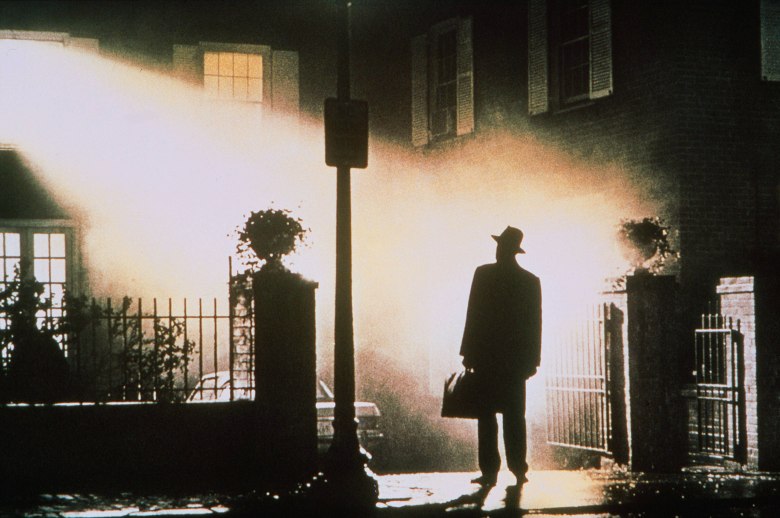
Search “Paranormal” on Google Images. In a fraction of a second, tens of millions of images are returned, most of which implicitly define paranormal (i.e., that which is beyond the normal) in disturbing terms, to say the least: demonic possession, alien abduction, unseen forces slamming doors and hurling household objects left and right.
Or, you can try your luck with an episode of the many “paranormal investigation” documentaries. Much the same fare is on hand: inexplicable shadows move across bedroom walls while the living sleep unawares; unquiet dead lurk in basements and abandoned buildings; paranormal researchers run shrieking from unhappy spirits they’ve unwittingly provoked!

There are some notable exceptions to the horrification trend, TV shows and films that either trivialize or instrumentalize the paranormal. That means films like Ghost Busters and the forthcoming Hocus Pocus 2, reducing the paranormal to comical absurdity. Or the Harry Potter books and movies, and TV shows such as The Magicians, which imagine alternate realities in which magical powers may be brought under the control of human beings with a bit of talent and the proper training.
Most striking in all of this is not that we frequently enjoy being scared, laughing at the absurd, or imagining a world populated by magical forces we might someday learn to command. What is remarkable is that those aspects of the paranormal which have been robustly explored by experienced scientists and journalists remain largely excluded from these Giant-sized expressions of popular culture mentioned above. More, the excluded phenomena are remarkably positively and edifying, so much so that even studying them has been shown to measurably improve one’s sense of well-being.
Consider, as one of many possible examples, the evidence for what is often referred to as the “survival hypothesis,” that is, the idea that some part of us continues to exist after the demise of the body and brain. The history of religions is filled to the brim with experiences of Other Worlds (e.g., heaven or hell, reincarnation, sheol, the bardo, purgatory, the land of reeds, the great mysterious, the spirit road, etc.). But here I’m talking about high quality contemporary research, by demonstrable experts, into the empirical aspects of survival. Consider, for instance, the evidential and transformational impact of Near Death Experiences (NDEs).
Since the publication of Raymond Moody’s Life After Life in 1975, the idea that some people (about 10%-20% of the larger American population) who draw perilously close to death, or are absolutely dead by all criteria, and then brought back by our medical technologies, report having full-blown conscious experiences during this time, has grown exponentially in popularity. There is a great deal in NDEs to take seriously, such as NDE reports which include veridical details directly observed from outside of the body during the time in which the NDE-er was clinically dead, or the powerful, long-term, and clinically measurable impact NDEs have on those who have them. As Dr. Bruce Greyson, a former ER doctor and Professor Emeritus of Psychiatry and Neurobehavioral Sciences at the University of Virginia, argues in his recent book, After: A Doctor Explores What Near-Death Experiences Reveal about Life and Beyond, NDEs fundamentally restructure the ego, personality, and life, of those who have them. Taken together, such considerations suggest that NDEs are not just real experiences, but experiences of reality.
There is a great deal more to support “the survival hypothesis,” such as After Death Communications (ADCs), being contacted or communicated with by someone close to you who has recently passed away, and End of Life Events (ELEs), lucid experiences in which spirits of those who were close to you in life but have since passed away come to escort you across the life/death boundary at the time of your own death. Both, of course, are easily horrorized, that is, transmogrified into something utterly disturbing and fearful, something which feeds our omnipresent anxieties regarding the end of life. But these experiences, alongside NDEs, represent important sub-fields within the larger emerging academic field of Near Death Studies. Yes, it’s a thing one can study in an increasing range of higher-ed contexts. And, when we follow the empirical evidence rather than the Hollywood images (which we’ll continue to do in future iterations of Paranormal Culture), you may find this material to be enormously edifying, something that will help to stand down your fears and anxieties.
 Paranormal Culture: A Popular Journal in the Superhumanities!
Leave a comment